
The Great Skills Drain
Construction's labor shortage isn't new, and it isn't about headcount. It's the craft walking out the door — and what owners have to do about it now.
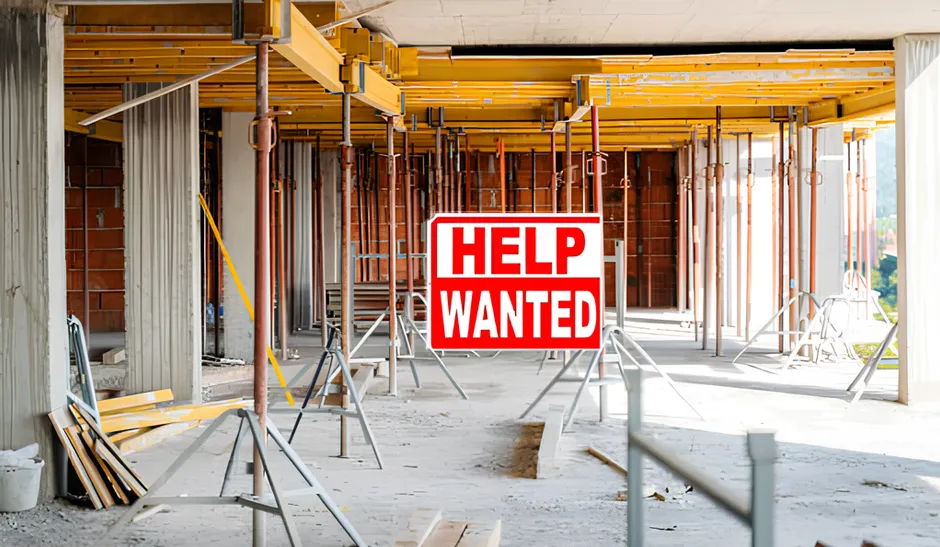
The skilled-labor shortage in construction is being written about as though it were breaking news. It isn’t. It has been here for well over a decade — quietly, structurally, getting worse underneath headline numbers that were pointing the wrong way. The people just now noticing it are late, and the way it is usually reported gets the problem backwards.
Here is the part that misleads everyone. On paper, the shortage looks like it is easing. Associated Builders and Contractors (ABC) estimated the industry needed to attract about 650,000 workers above normal hiring in 2022. By 2024 that figure was roughly 501,000; for 2025, about 439,000; and for 2026, ABC now projects a need closer to 350,000. The construction workforce has also gotten younger — its median age recently dropped below 42 for the first time since 2011.
Fewer workers needed, a younger workforce — that sounds like recovery. It is not. Those numbers hide a split that is the whole story: the workforce is growing at the bottom and shrinking at the top.
Over roughly the last decade, entry-level construction laborers grew about 73%, while the total construction workforce grew only about 25%. In the same period the number of carpenters fell about 7.5%, construction managers grew barely 2%, and the experienced core of workers aged 25–54 declined about 8%. More than 40% of the decade’s workforce growth was low-skilled laborers — a group that is only about 19% of the workforce.
Read that again. Nearly all of the growth everyone is pointing to is unskilled. The trades that actually build the work — and the seasoned superintendents, foremen, and managers who run it — are flat or falling. A younger median age is not good news here; it means greener.
The people leaving are the ones who carry the craft. The industry’s average retirement age is about 61, and more than one in five construction workers is already older than 55. Every year, a wave of thirty- and forty-year veterans walks off the job for the last time, taking judgment that was never written down with them. What replaces them at the gate is a laborer with months of experience, not decades.
Two more forces are pulling from the skilled end specifically. Immigration patterns shifted sharply in 2025 — inflows of undocumented workers fell steeply while departures accelerated — pulling experienced hands out of regional labor pools just as large industrial and data-center projects compete for them. And ABC’s chief economist has been explicit that this is structural, not cyclical — driven by aging, retirement, demographics, and immigration, not a temporary swing that hiring will absorb. Looking out over the next decade, ABC estimates the industry needs on the order of 1.9 million workers just to keep pace with growth and retirements; the National Association of Home Builders has put the annual need even higher.
What This Means for the Owner
The market has changed, permanently, and most owners are still operating as if it hasn’t. You can no longer draw up a set of plans, put them out to bid, and expect a deep field of eager contractors. Skilled builders now have more work than crews. They hand-pick the projects that will be successful for them, and they pass on the ones that look poorly planned or difficult. That is why a number of public projects over the past few years have drawn a single bid — or none at all.
In a market where skill is the scarce resource, the best builders choose their owners — not the other way around. Your job is to make your project the one they want, and to plan it so it can be built successfully with a leaner, greener field than the one you remember. That is a different job than owners are used to doing, and it starts long before a shovel is in the ground.
Below are six concrete steps an owner can take. They share one theme: in a skilled-labor-scarce world, the advantage moves to whoever plans earliest and manages hardest.
1. Define and plan the project early — before you engage designers.
Accept that there is significant work to define and plan a project before design even begins, and resource it. Our experience is that 70–80% of projects reset within two to four months of starting design — almost always because the owner’s intent was never fully defined going in. That churn is expensive in ordinary times. In a skilled-labor market, it is fatal: it signals a shaky project to exactly the builders you most want, and they walk. Early definition is how you de-risk the job enough that good contractors compete for it.
2. Be honest about your internal capacity — and go get what you're missing.
3. Choose the delivery method early — so you can bring the builder in early.
4. Design for prefabrication and off-site work.
Prefabrication is no longer a niche; it is a direct answer to field-labor scarcity. Moving assemblies into a controlled shop uses off-site labor, reduces on-site headcount, cuts material waste, and raises quality — because factory conditions and repetition produce better work than a short-handed field crew. The catch is that it only pays off with extensive coordination during design and procurement. It has to be designed in from the start, not bolted on later.
5. Design and procure logistically — buy what's actually available.
Supply chains remain constrained, and long-lead items can dictate a schedule. Design and procurement have to identify and secure materials that are actually available now, rather than specifying an ideal product and discovering the lead time after award. Waiting until the design is finished and the job is awarded to start buying is how you turn a material delay into a redesign, a reschedule, and a cost increase — all at once.
6. Build automation and technology into the design.
Robotics, once experimental, are now working on real jobsites — layout, demolition, material handling, repetitive install — and paired with digital layout and AI-assisted monitoring, they extend the reach of the skilled people you do have. These tools don’t replace craft; they multiply it, letting a smaller experienced team do more and letting less-experienced workers perform to a higher standard. Owners who design with these methods in mind, rather than leaving them to chance in the field, get the benefit.
This Is the New Normal
The shortage isn’t coming. It’s here, it’s structural, and it is fundamentally a shortage of skill — not of headcount that the next hiring cycle will refill. Owners who keep treating it as a numbers problem that will sort itself out will keep drawing thin bid lists and absorbing the overruns that follow. Owners who recognize it for what it is — and who plan early, choose delivery deliberately, design for prefabrication and available materials, and put experienced leadership on the project from the first decision — will get the better builders, the better prices, and the projects that actually finish on time and on budget.
That is precisely the role Cimarron plays for owners: supplying the early planning, the delivery strategy, and the hands-on management that make a project the one skilled contractors want to build — and then leading it through to a successful close. In this market, that experience is the difference between a project that gets built and one that sits waiting for bids that never come.
Cimarron helps owners define, structure, and lead capital projects so they succeed even in a skilled-labor-scarce environment.